info@labolsadepapel.com

When sustainability in packaging is discussed, much of the conversation tends to focus on what happens at the end of a product's life: recycling, reuse or waste management.
However, there is a question that is becoming increasingly important:
Where does the raw material used to manufacture packaging come from?
In the case of paper bags, the answer is one of their greatest strengths.
Every package has an origin
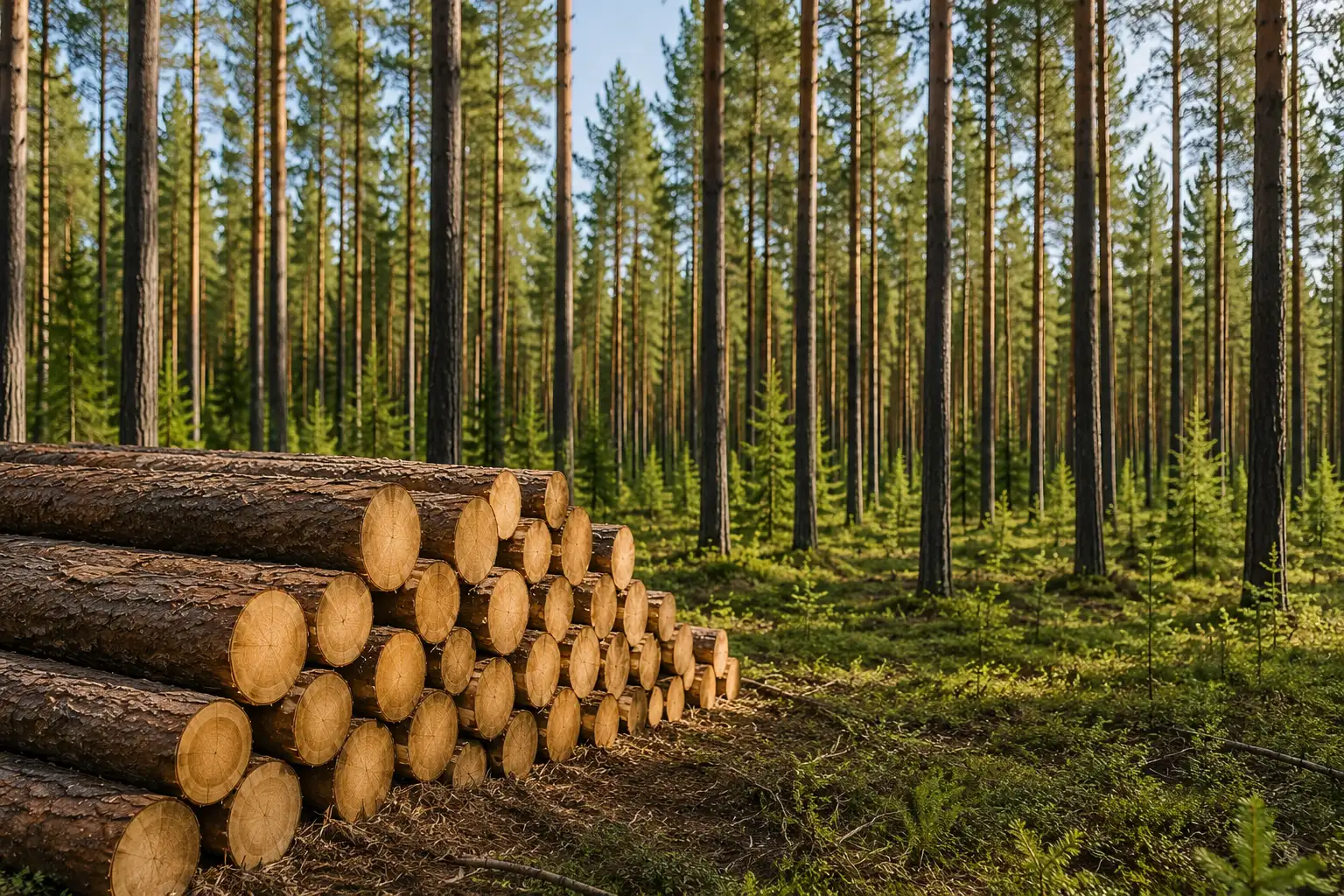
Before becoming a bag, paper is part of a natural cycle based on a renewable raw material: wood sourced from responsibly managed forests.
Unlike materials that depend on finite resources, paper is produced from a raw material that can be regenerated through proper forest management.
For this reason, when we talk about a paper bag, we are not only talking about an industrial product. We are also talking about a value chain linked to a renewable natural resource.
The value of renewable resources
The transition towards a more sustainable economy requires attention not only to how materials are used, but also to where they come from.
Renewable resources have the capacity to regenerate over time, helping to reduce dependence on limited raw materials.
This characteristic has become increasingly important in European policies related to sustainability, the bioeconomy and the efficient use of resources.
Paper bags are part of this model based on natural and renewable raw materials.
More than recycling
Recycling is a fundamental part of the circular economy, but it is not the only aspect that should be considered.
A package begins its story long before it reaches the consumer.
For this reason, it is important to consider the entire life cycle of a product, including the origin of the materials used to manufacture it.
In the case of paper bags, the renewable nature of the raw material is a value that accompanies the product from the very beginning.
A well-established value chain
The manufacture of paper bags is part of a highly developed industrial chain across Europe.
Forest management, pulp production, papermaking, converting and recycling are all part of a system that has been evolving and improving its efficiency for decades.
This broader perspective allows us to understand paper bags not as an isolated product, but as part of a production model based on renewable resources.
An increasingly relevant value
At a time when companies, brands and consumers are paying increasing attention to the origin of the products they use, understanding where raw materials come from is becoming more important than ever.
Paper bags offer a distinctive characteristic that accompanies them from the very beginning: they are made from a natural and renewable raw material.
For this reason, when we talk about paper bags, we are not only talking about packaging.
We are also talking about origin.
And origin makes the difference.