







There comes a moment when we believe a product’s story has come to an end.
We have used it, it has served its purpose, and we no longer need it.
But from the perspective of materials, that moment may simply be the beginning of a new chapter.
That is why, if we truly want to understand the footprint we leave behind, it is not enough to ask where things come from.
We must also ask what happens to them afterwards.
The Purchase Ends. The Bag Carries On
A bag serves a very specific purpose in retail: making it easy and convenient to carry purchases safely.
But its journey does not have to end when we get home.
Many bags are reused to carry other items, store belongings or make further purchases. During this time, they continue to be useful and, in many cases, still carry the identity of the business that provided them.
The bag leaves the shop, but it remains part of the shopping experience.
That, too, is part of its story.
When Waste Can Become a Resource Again
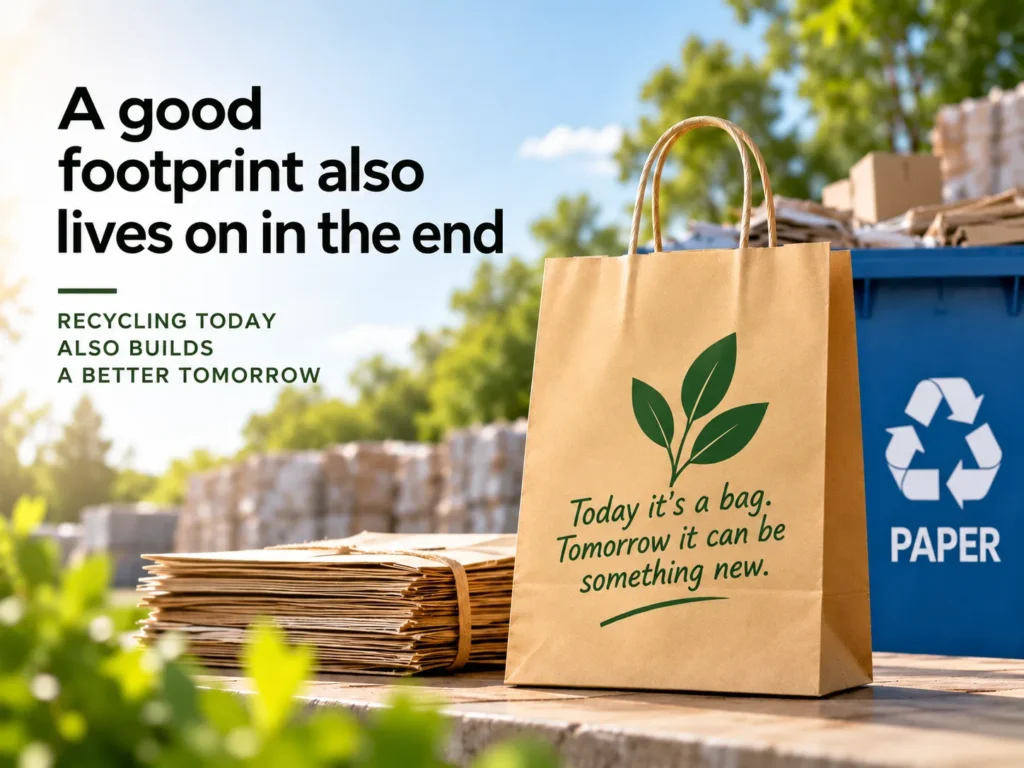
Eventually, there will come a time when the bag is no longer used.
And that is when a crucial question arises: what can happen to its material?
In an increasingly circular economy, the aim is to keep materials within the production cycle for as long as possible.
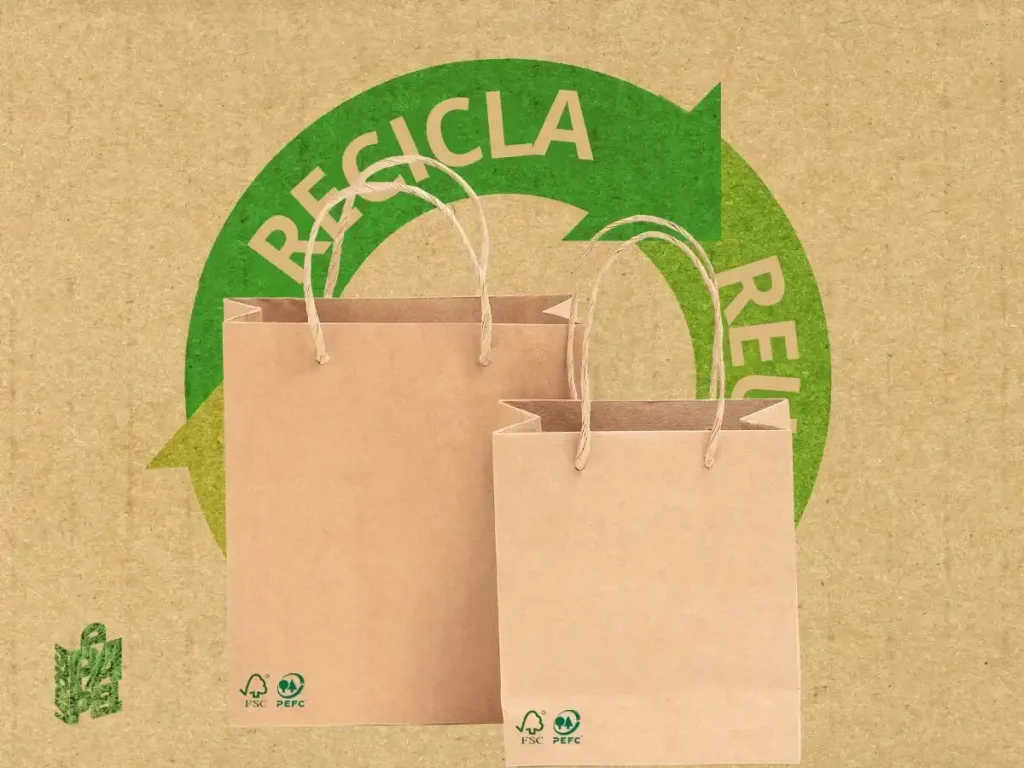
In the case of paper, collection and recycling make it possible to recover fibres and use them again to manufacture new paper products.
What seemed to be the end of one journey can therefore become the beginning of another.
This ability to recover materials changes the way we understand waste.
It is no longer simply about disposing of what we have used correctly. It is also about preserving the value of materials and enabling them to re-enter the system.
What Happens Outside the Cycle Matters Too
There is another dimension that we sometimes overlook when talking about sustainability.
Products do not disappear when we stop using them.
If they are not collected and managed properly, they may end up in places where they should never have been.
That is why preventing litter, facilitating collection and favouring materials that can enter effective recovery systems are also part of responsible consumption.
The footprint we leave behind does not depend solely on how we manufacture or use things.
It also depends on what we do with them afterwards.
Thinking in Cycles, Not Just Products
For decades, we have understood many products through a simple sequence: manufacture, use and dispose.
The circular economy proposes a different approach.
Thinking about where materials come from, extending their useful life, recovering them and bringing them back into the production cycle.
The paper bag is part of this approach when, after fulfilling its purpose, it is properly introduced into the paper collection and recycling system.
And perhaps this is where one of the most important ideas about sustainability lies.
It is not enough to think about what we use today.
We must also think about what we make possible for tomorrow.
Because a good footprint is measured not only by what we leave behind, but also by what we make possible afterwards.