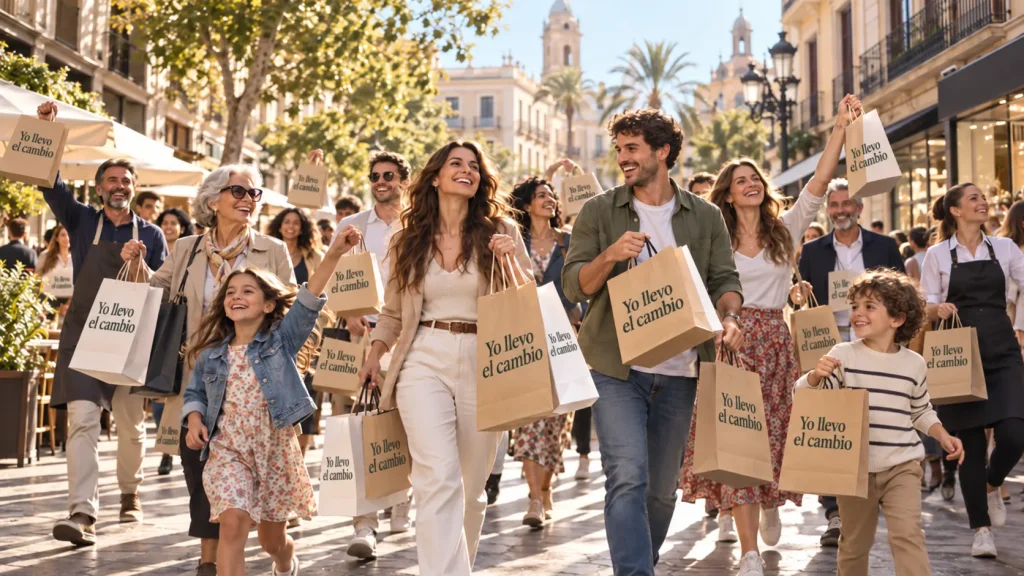











For years, new consumers have been discussed as though they belonged to a particular generation. They have been portrayed as young, digital, impatient, highly informed and especially concerned about the environment.
However, the transformation of consumer behaviour has ultimately reached people of all ages.
Today, an older person can compare prices on their phone before entering a shop. A young consumer may value the personal attention offered by a small retailer. A family can buy online and collect its order from a nearby shop. And the same person may look for speed in one purchase, advice in another and a particularly thoughtful experience when buying something important.
What is truly new is not the consumer’s age. It is the way they relate to retailers, brands and the decisions they make.
More information, but also more uncertainty
Never before have we had so much information available before making a purchase.
We can read reviews, compare products, check specifications, find out where materials come from and discover within minutes what other consumers think about a company.
But having more information does not necessarily mean having greater trust.
Alongside useful content, there are fake reviews, confusing discounts, advertising messages that are difficult to distinguish from recommendations, and environmental claims that cannot always be verified. Consumers have learnt to navigate this environment, but they have also become more cautious.
They no longer passively accept what a brand tells them. They compare it with their own experience, with what they observe in the shop and with the specific decisions the company makes.
Sustainability matters, but it is not enough
Consumers today remain concerned about climate change and the environmental consequences of their decisions, but that concern coexists with price, convenience, functionality and the need to make ends meet.
The European Commission’s Consumer Conditions Scoreboard reflects this complexity. Environmental considerations influenced 43% of purchasing decisions in 2024, thirteen percentage points fewer than in 2022. The Commission itself links this decline to the rising cost of living and a lack of trust in many environmental claims. At the same time, 81% of Europeans support the goal of achieving climate neutrality by 2050, and 59% say they have recently taken some form of action against climate change. These figures do not point to indifference, but to consumers trying to reconcile their convictions with what they can afford, while demanding greater credibility.
Sustainability, therefore, cannot be presented as an isolated quality capable of making up for everything else.
A product has to work. A service has to be convenient. The price has to be reasonable. And every environmental claim must be supported by clear, verifiable facts.
They want solutions, not posturing
This change also affects the bag a customer receives at the end of a purchase.
Consumers do not need a bag that merely looks sustainable. They need a bag that performs its function properly, protects the products, carries their weight, is comfortable to use and can be used again whenever possible.
The choice of material matters, but so do the design, strength, appropriate size and amount of material used.
The paper bag combines precisely these two dimensions. It is a practical solution for carrying purchases and, at the same time, a material choice consistent with an economy that seeks to use renewable resources and keep them in circulation.
Its environmental value does not come from printing a leaf on it, using the colour green or adding an inspiring word. It comes from its raw material, the way it is manufactured, its ability to perform the function for which it was designed and the subsequent recovery of its fibres through recycling.
Europe is turning this demand for rigour into a new market rule. The European Directive on Empowering Consumers for the Green Transition, which will apply from 27 September 2026, strengthens protection against greenwashing and generic environmental claims that cannot be properly substantiated.
The bag appears at the moment of truth
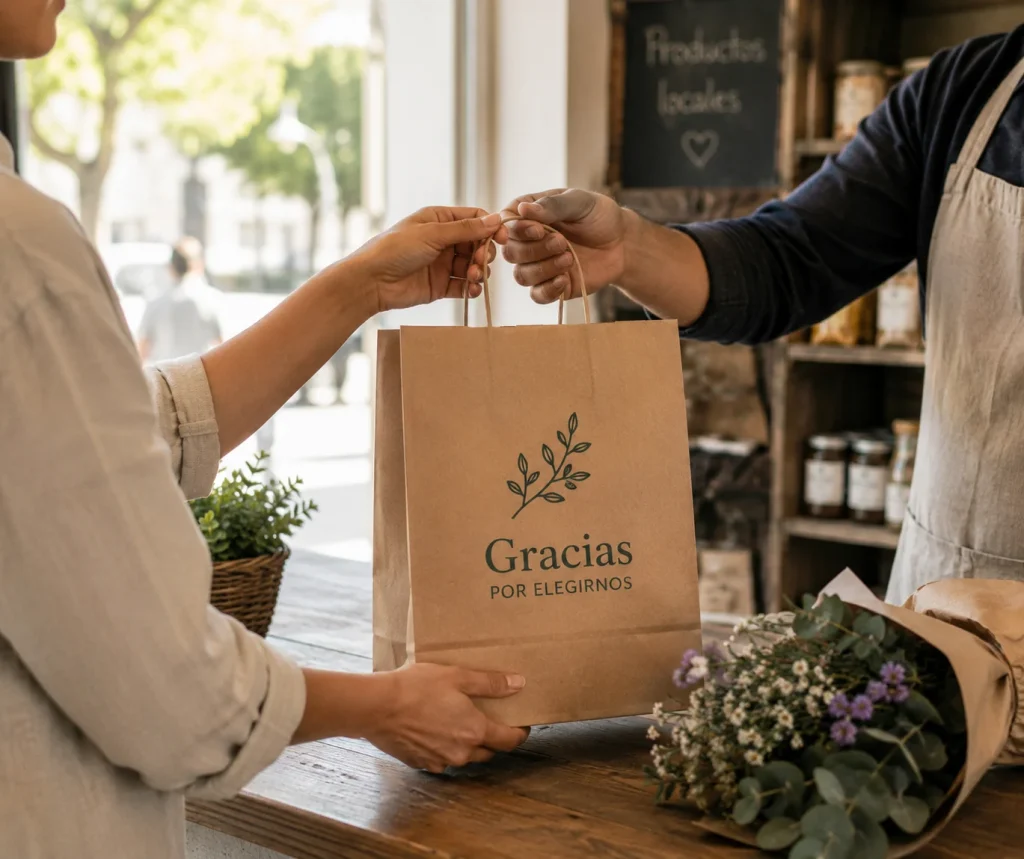
Handing over the bag may seem like a minor detail in the shopping experience. However, it happens at a particularly significant moment: when the retailer completes the service and the customer is about to leave.
Asking whether a bag is needed prevents unnecessary use and restores value to what is being provided.
When it is needed, the bag has to perform. It must suit the purchase, make it easier to carry and extend beyond the shop the care with which the retailer has served the customer.
The bag accompanies the customer along the street, reaches their home and can be used again. During that journey, it also gives visibility to the retailer that provided it.
It does not replace a good product or good service. Nor does it, on its own, demonstrate the entirety of a company’s environmental policy. But it can become a tangible expression of its principles.
Consistency before perfection
New consumers do not necessarily expect companies to be perfect. They know that every economic activity uses resources and generates impacts.
What they reject with increasing clarity is inconsistency.
They distrust a company that talks about sustainability while maintaining practices that do not correspond with that message. And they value a company that explains simply what it does, acknowledges what it still needs to improve and makes understandable decisions.
The paper bag can form part of that consistency.
It does not need to promise more than it is. It simply needs to perform its function well, come from a responsibly managed renewable resource, be reusable whenever its condition allows and then enter a widely established recycling system.
The new consumer is not asking to be persuaded by grand words.
They want to see that every choice makes sense.