







When we think about sustainability, we often focus on materials, energy, or emissions. But there’s another vital resource that’s often overlooked: water. In paper manufacturing—especially for paper bags—water is not only essential, but also managed with great care and efficiency.
Where does the water come from?
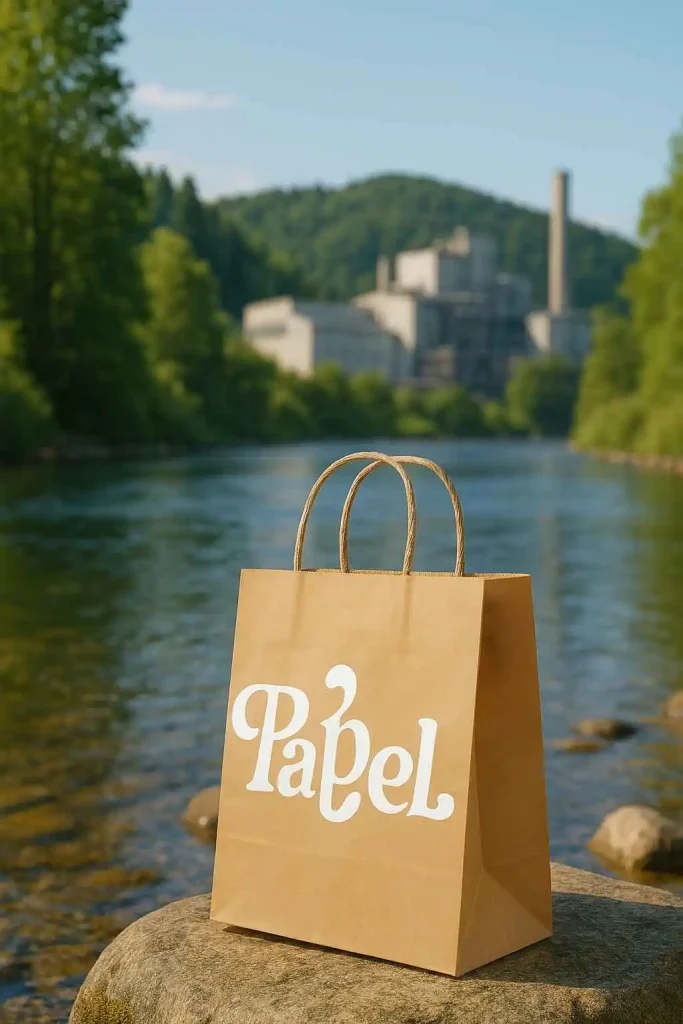
Most pulp and paper mills in Europe are strategically located near abundant water sources, allowing for direct, controlled, and sustainable access. According to the latest industry data:
- 87% of the water used comes from surface water, such as rivers and lakes.
- 12% is drawn from groundwater.
- Only 1% comes from public supply systems.
This reflects a strong commitment to minimizing pressure on drinking water networks and using natural sources responsibly.
Less consumption, more reuse
Since the 1990s, the European paper industry has reduced average water intake by 40% per tonne of paper produced. How? Through modernized processes and a circular water system:
- Water is reused multiple times within the plant.
- About 90% of the water taken is returned to its original source clean and treated.
- The remaining 10% is either evaporated, retained in the final product, or absorbed in solid waste.
A commitment to balance
This responsible and efficient use of water is a cornerstone of the industry’s environmental commitment. Making paper for bags doesn’t mean wasting resources—it means managing them wisely, ensuring a sustainable balance between industry, nature, and the future.